
Venus Williams prepares for the US Open with a familiar objective and a very different set of circumstances. The seven-time Grand Slam singles champion is no longer chasing a place at the top of the rankings, yet her return to the hard-court calendar carries the same unmistakable force that has defined her career. At an age when most former champions have moved comfortably into retirement, Williams continues to train, compete and test herself against players sometimes half her age. Her preparation has become a story of discipline as much as tennis. Every practice session。recovery block and tournament appearance offers another measure of what her body can still produce, and of how much she still wants the sport to remain part of her life.
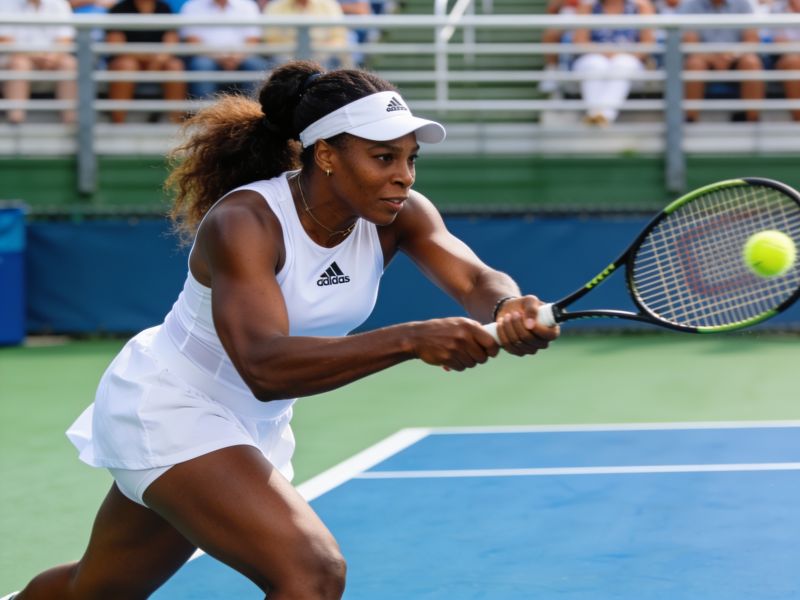
Venus Williams prepares for the US Open against a backdrop of questions about match sharpness and physical durability. A long career has left her with an extraordinary reservoir of experience, but experience cannot replace court time. The US Open's hard courts demand repeated acceleration, sudden stops and the ability to survive extended rallies under humid New York conditions. Williams knows those demands better than almost anyone. She won the women's singles title in 2000 and 2001, reached the final several other times。and built some of her most memorable victories in the pressure of Arthur Ashe Stadium. The challenge now is less about proving that she belongs in the conversation and more about finding a realistic path through the opening rounds.Venus Williams prepares for the US Open in a tennis landscape that has changed dramatically since her first appearance at the tournament. Power remains central。but the modern game also rewards relentless defense, aggressive returns and exceptional movement. Younger opponents arrive with detailed data on every tendency, from the direction of Williams's first serve to the patterns she favors when pulled wide on the backhand side. Her answer has never been to imitate the newest generation. She still relies on a powerful serve, a compact forehand and the willingness to attack early in a point. When those weapons are working, even a short exchange can turn into a reminder of why she became one of the sport's defining figures.Venus Williams prepares for the US Open with an approach that appears more measured than ceremonial. She has spoken throughout her career about listening to her body, managing pain and choosing competition carefully。
lessons that have become increasingly important during the later stages of her playing life. A successful build-up may not require a deep run at every preceding event. It may mean completing several matches without a physical setback, sharpening the return game and leaving practice with enough energy for the following day. That kind of preparation rarely produces dramatic headlines, but it can determine whether a veteran survives the first demanding week of a Grand Slam. In Williams's case, the small details have always carried unusual weight.Venus Williams prepares for the US Open knowing that the tournament will judge her immediately, but the significance of her presence will extend beyond the result on the scoreboard. She remains a bridge between generations。linking the era of serve-and-volley instincts and all-court variety with a tour shaped by analytics, heavy topspin and relentless athleticism. Fans who watched her dominate the New York stage years ago will look for flashes of that old authority, while younger spectators may see a living account of tennis history still competing on its biggest court. Williams does not need another title to validate her career. Yet if her preparation produces one more compelling performance under the lights, it will offer something more valuable than nostalgia: proof that ambition can evolve without disappearing.